Willem van Spaendonck, in his role as Brother Tuck, gets to visit some of the most remarkable places in the Netherlands.
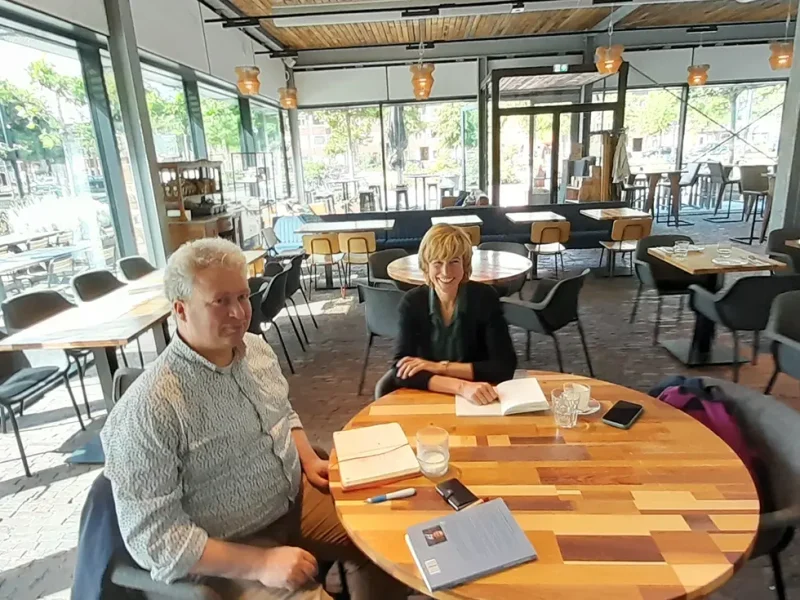
This time, he finds himself in a sustainable and fully recyclable building in Amsterdam North, right next to the ferry terminal connecting to Java Island. Nestled between a former factory building, now home to a collection of trendy start ups, and a large catalyst manufacturing plant, lies De VerbroederIJ.
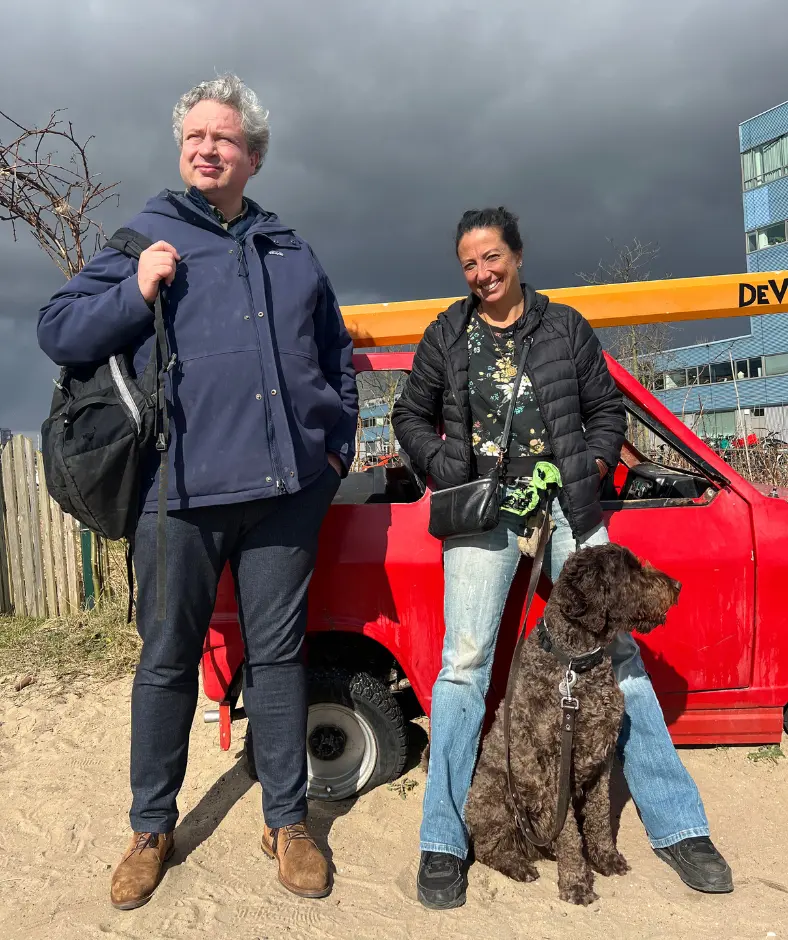
Here, Brother Tuck sits down with owner Tania and employee Natascha to talk about connection, community, and bringing people together…
The Story of De VerbroederIJ
De VerbroederIJ is a community hub for activities organised by, for, and with local residents. Many of these activities are free of charge. Here you will find De MoestuinderIJ (the community garden), De Zagerij (the workshop), a café, and a venue for meetings and events.
Through this wide range of activities and facilities, De VerbroederIJ has successfully become a true meeting place for the Vogelbuurt neighbourhood and the surrounding area.
The Story of Natascha
The Story of Natascha
The first meeting between Tania and Natascha was a memorable one. Together with her fellow initiators, Tania had come to visit the small beach area for which the Municipality of Amsterdam had issued a tender.
As they were walking around the site, Natascha emerged from the waters of the IJ after a swim and asked what they were doing there.
Tania explained that they wanted to create something special on that spot: a combination of hospitality and an urban farm, while also serving as a meeting place for the local community.
Natascha’s response, delivered in a strong Amsterdam accent?
“No way!”
To which Tania turned to her fellow initiators and said:
“Look, a real old school Noord local.”
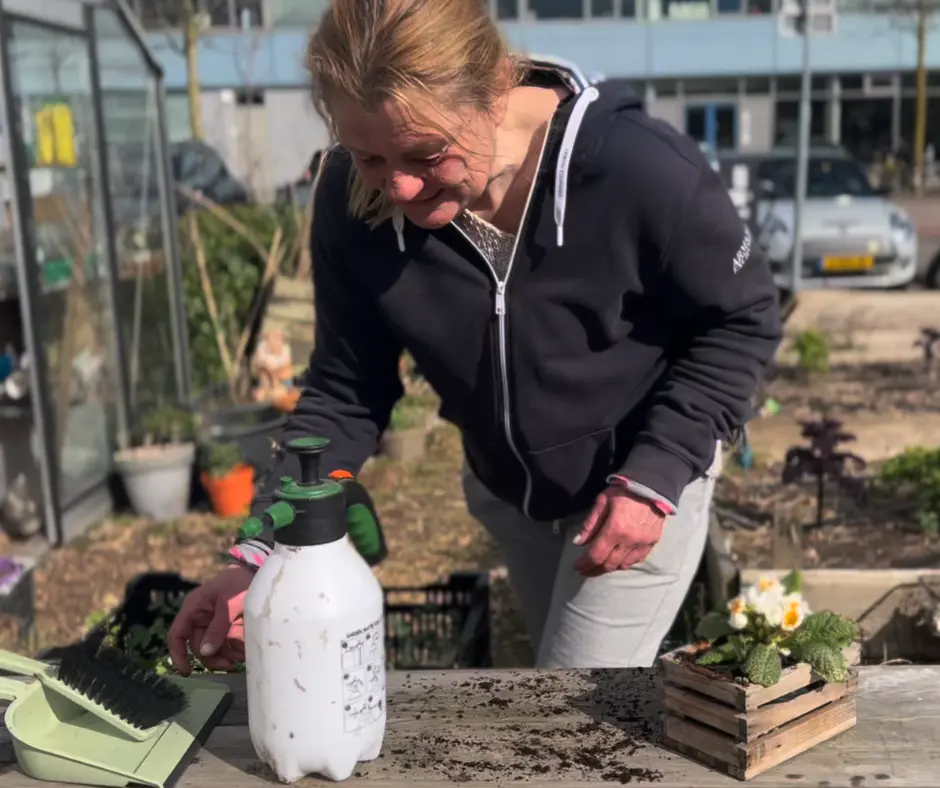
Ten years later, De VerbroederIJ has become a well known name in Amsterdam and the surrounding area. And Natascha? She has become one of its driving forces. She enjoys working in De MoestuinderIJ and also helps with repairs and maintenance around the site.
Why does she volunteer?
“Because it gives me the freedom I need,” she explains.
“This place means so much to me,” she says with a contented smile. “For twenty years, I made a mess of my life and became isolated. Working here has given me purpose again, and that isolation is gone. I genuinely like my colleagues too.”
Brother Tuck asks curiously:
“Now that things are going so much better for you, wouldn’t you like to move into paid employment?”
“No,” Natascha answers firmly. “I really need the freedom that comes with volunteering. Otherwise, I’m afraid I might relapse.”
Finally, she responds to a question about the large numbers of visitors from outside Amsterdam North who come to De VerbroederIJ at weekends.
“No, not at all. I live just around the corner. If it gets too busy, I simply go home.”
5 Questions for Tania Spaans
- What would be the first thing you would do as Director of UWV?
I would make the gap between volunteering and paid employment much smaller and easier to bridge. At the moment, I am not allowed to use volunteers in my hospitality business, and I receive no funding for guidance if people work fewer than 18 hours per week. Yet these are exactly the people who need support the most, especially in the beginning, when they can or want to work fewer than 6 hours a week. When we raise this issue with the municipality, we are often turned away. Even though they are happy to use us as an example of good practice. - What is the secret behind De VerbroederIJ?
The secret is our hybrid structure: the combination of a commercial hospitality business and a foundation. This allows us to organise activities that attract a wide variety of target groups. Together with local residents, our volunteers, and my employees, we have built a close-knit community.
- What is the biggest mistake you have ever made?
When we were developing the plans and getting started, one of my co-founders kept insisting that we should bring in external support. I chose not to do that. Looking back, I realise that I cannot do everything on my own. I should have involved much more expertise from the start.
- What makes you most proud?
That we have succeeded in creating a programme of activities that offers something meaningful for every local resident. We welcome both people with a migrant background and highly educated professionals. As a result, a genuine sense of community has emerged.
- Which well-known Dutch person would you like to ask a question, and what would your first question be?
I would like to ask Prime Minister Schoof. I am curious to know how he believes the barriers we encounter when helping people return to work can be removed. The gap between volunteering and paid employment is far too large, and returning to work often comes with financial risks that can leave people worse off. How can we ensure that nobody is disadvantaged by taking the step back into employment?