On a beautiful day, our Brother Tuck walks into the Work Centre Amersfoort Region. The first thing he notices is that nobody asks to see his passport.
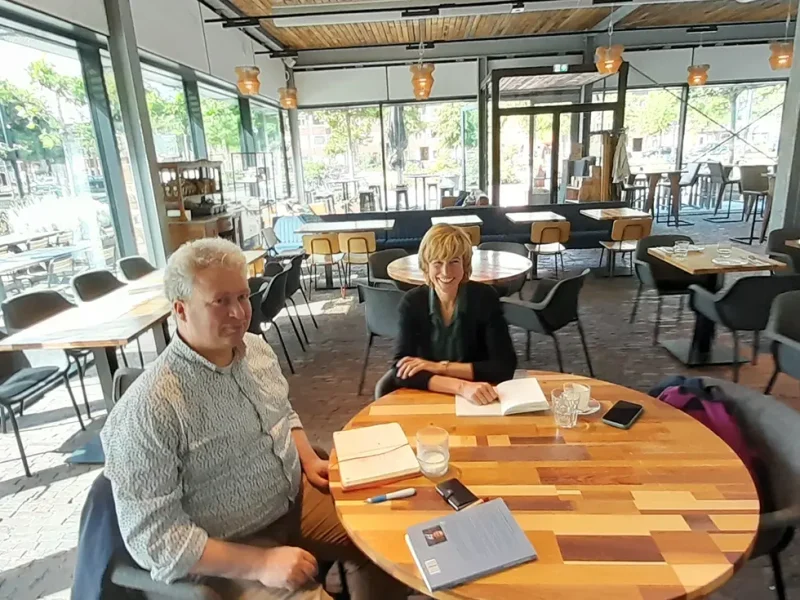
Today, he is the guest of coordinator Wim Mol, who proudly shows him around and explains how the Work Centre operates.
A Low Threshold Start at the Work Centre Amersfoort Region
Wim explains that they always begin by checking whether a visitor lives in one of the participating municipalities and how they found their way to the Work Centre. They then use a friendly and accessible approach to gain insight into the visitor’s current situation.
This helps the guide supporting the visitor understand what should be taken into account during the rest of the process. When necessary, people are immediately referred to partner organisations, such as debt counselling services or the Legal Aid Centre.
Working People and People Without Benefits
Meanwhile, Wim explains that around 1,200 individual visitors have already made use of the services provided by the Work Centre.
Remarkably, most of these visitors are people who are currently employed but looking for a different job, as well as people who are not receiving any unemployment or welfare benefits.
Of course, benefit recipients and job seekers are also welcome to visit the centre and explore the available support. However, they are generally guided through the more traditional support and employment services already in place.
The Power of Talent Cards
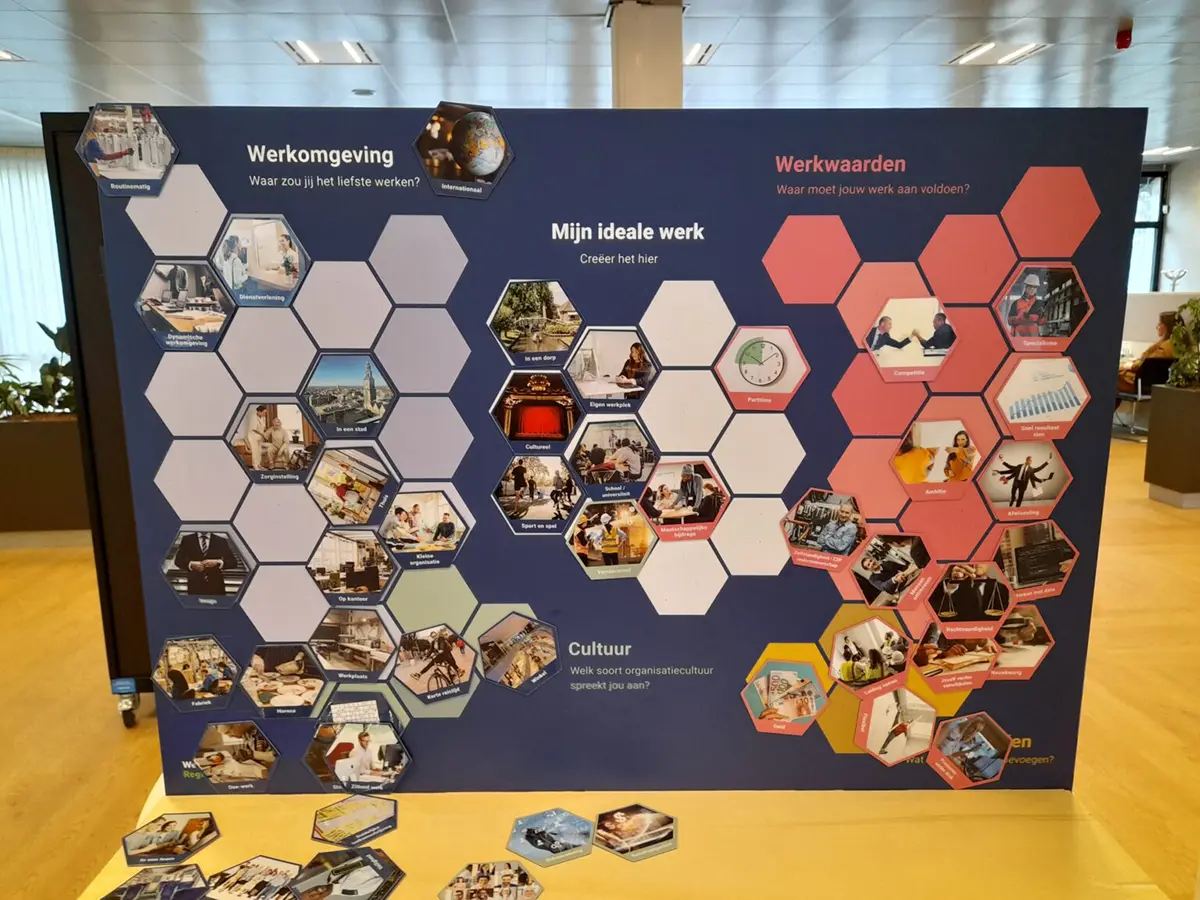
Then comes the most enjoyable part: mapping people’s talents. This element of the service is still very much evolving. Initially, the centre used a wall with recessed cubes. Visitors would select a talent, and the other sides of the cube displayed jobs that matched that talent. In practice, however, this approach proved to be impractical.
Recently, the team introduced hexagonal talent cards. Much like a board game, the cards are connected to one another and combined with preferences regarding what a future employer should offer. A photograph of the completed layout creates a personal overview that participants can always refer back to later. There is no need to save anything digitally.
One drawback of this method is that it is less likely to reveal unexpected career paths, something that often happened with the old yellow blocks.
At the end of the process, available vacancies are reviewed. The discussion also focuses on whether someone is ready for a next step, such as following a training programme or further education.
I would like to thank Wim Mol and the team at the reception desk for their warm welcome.
Because I think this is a fantastic initiative, but one that could become even better, I would love to launch a challenge together with the Work Centre for students specialising in AI: design an app that can analyse a photo of the talent cards and generate suggestions for suitable jobs and potential employers.
Of course, I will keep you updated on any developments through my blog.