The Start of the BioFriends Pilot at the Van Gogh Museum
While thousands of visitors admire the masterpieces of Van Gogh, something equally fascinating is happening behind a closed door.
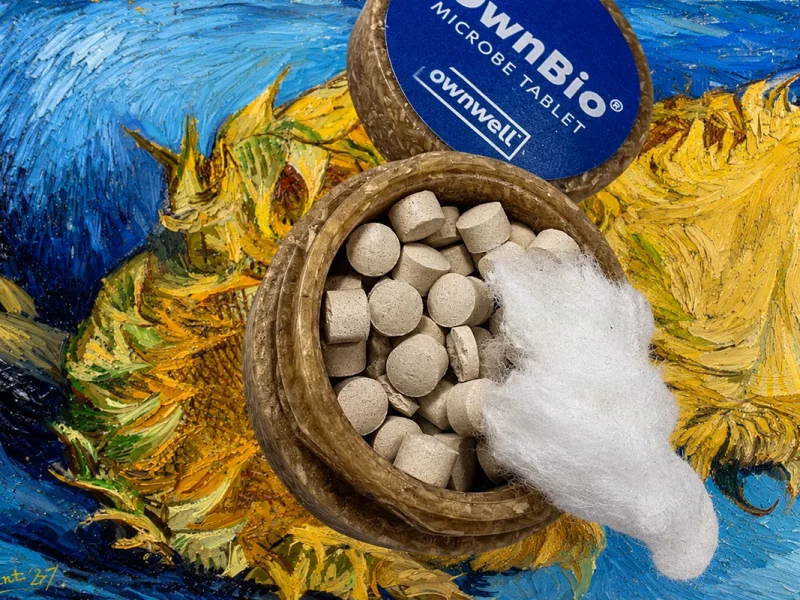
In a storage room at the museum, there are no paintings to be found, but rather microfibre cloths, mops, and a small tablet that, according to Jan van Triest, contains hundreds of millions of microorganisms.
“Does that really work?” is one of the first questions asked.
A fair question. After all, anyone who has spent years working with buckets of soapy water, cleaning products, and fixed routines does not simply switch to a completely different way of cleaning.
Less Chemistry, More Understanding
During the introduction, it quickly becomes clear that this pilot is not about a single new product. It is about a different way of looking at cleaning.
According to Jan, many contamination issues are actually caused by residual soap left behind on surfaces. Dirt attaches itself to this layer, causing surfaces to become dirty more quickly and allowing unpleasant odours to develop.
The microbiological approach of BioFriends aims to break this cycle naturally. Not by adding stronger chemicals, but by using water, microfibre materials, and microorganisms that help break down organic dirt.
It sounds simple, but in practice it requires a different way of working.
Getting Used to Change
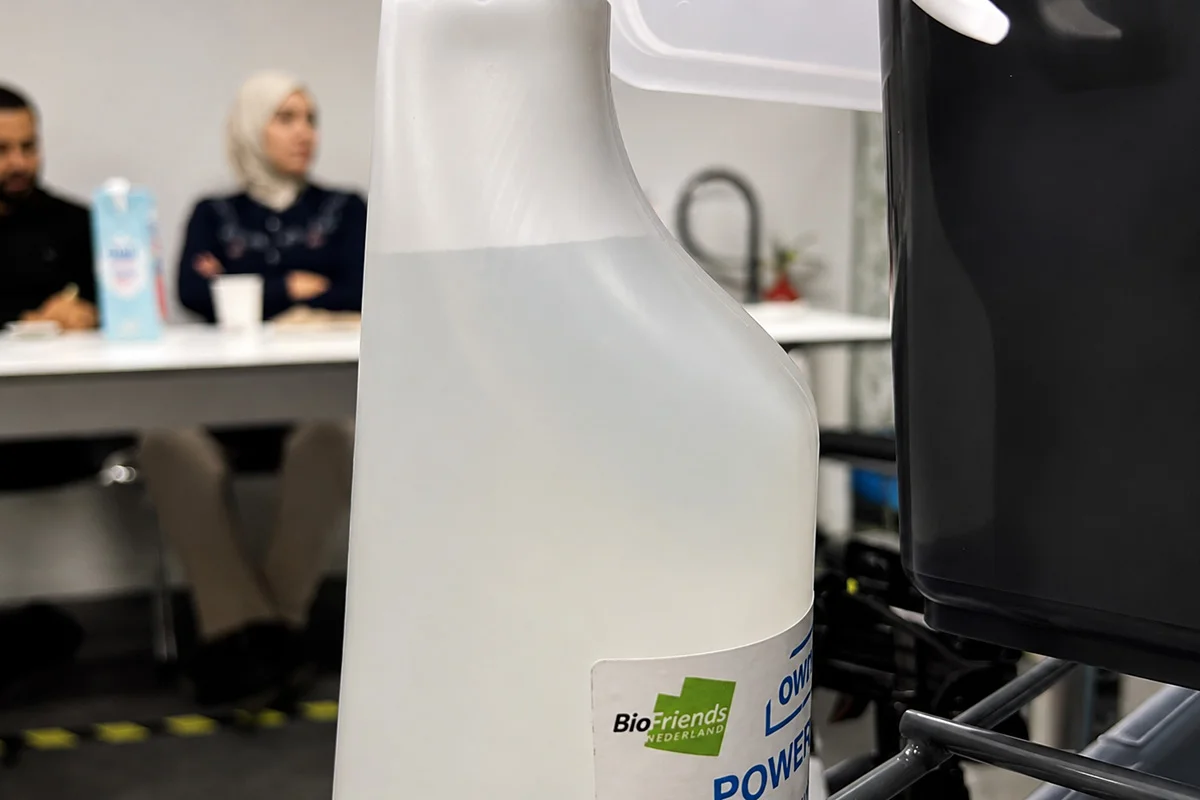
The employees listen carefully, examine the different materials, and ask questions about how they are used.
What happens if a floor still shows streaks? Why does the pilot last three months? And how will you know whether it really works?
Those very questions are what make this pilot so interesting.
“We do not expect everything to change overnight,” Jan explains. “Change takes time. That is why I will be back again next week. Not to check up on anyone, but to help.”
According to him, the first few weeks will mainly be about adapting, learning, and gaining experience.
Discovering Together
For Breedweer, this pilot is about more than innovation alone. It is also about listening to the people who work with it every day.
How do cleaning employees experience this new approach? Does it make the work physically less demanding? What do they notice in practice?
These are the questions that will need to be answered over the coming months.
One thing is already clear after this first introduction: curiosity has been sparked.
In Part 2 of this series, we will follow the team during the first weeks of the pilot and explore how the new way of working is being received in practice.