From Theory to Practice: The First Week with BioFriends
Streak-free cleaning is the focus today at the Van Gogh Museum. It is 25 June, 8:00 a.m. The sun is already shining brightly over Amsterdam, and the heat of the past few days is noticeable inside the museum as well. I enter once again through the staff entrance, where Site Manager Hicham is already waiting for me.
Last week, the cleaning team was introduced to a new way of cleaning. Today, it’s time to see how that new approach translates into everyday practice.
After a brief stop in the staff canteen with Jan van Triest from BioFriends, I immediately ask Hicham how things are going.
“Great!” he replies enthusiastically. “Streak-free floors, easy-to-use equipment… I’m really pleased!”
Today there is no presentation for the staff. Instead, we walk through the museum, visiting the restrooms, the café, the museum shop, and the meeting rooms.
Looking. Listening. Asking questions.
Because a revolution doesn’t begin in the office.
It begins on the work floor.
Streak-Free Cleaning: A Different Way of Working
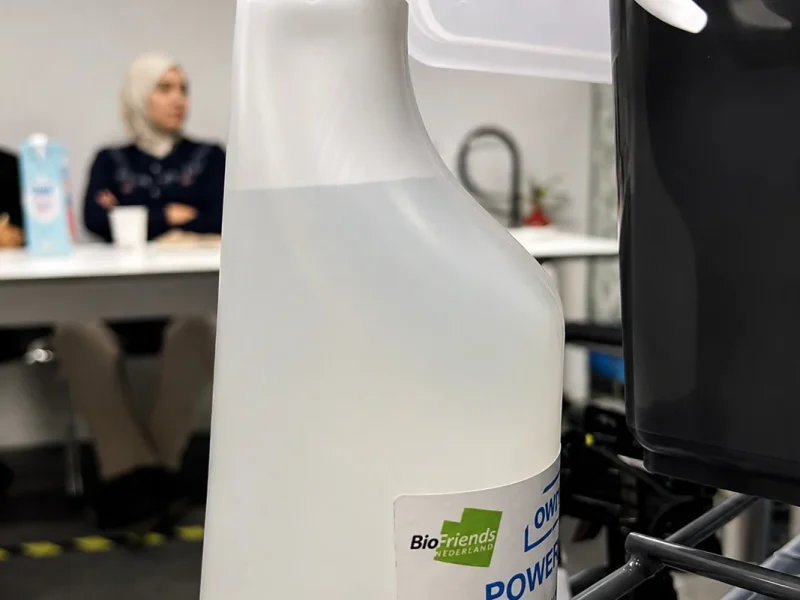
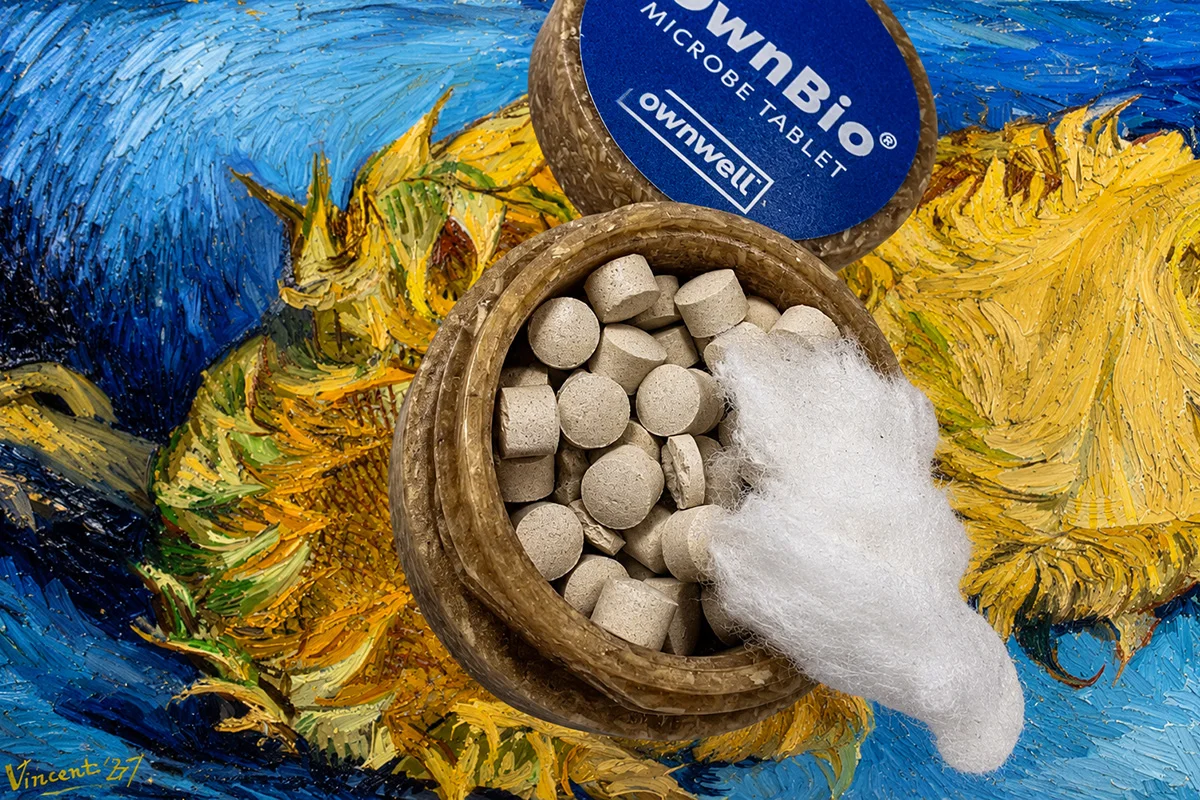
Together, we walk through the various departments. The new cleaning trolleys are now in daily use. Instead of a collection of bottles filled with chemical cleaning agents, there is a well-organised system with damp microfibre cloths, lightweight equipment, and a spray bottle containing nothing more than water and millions of beneficial microorganisms working together.
For the cleaning staff, this is about much more than using a new product. It requires a completely different way of thinking.
Using less water. Applying less physical effort. Trusting the equipment. And accepting that clean doesn’t always have to smell like flowers.
That takes some getting used to.
Listening to the People Who Do the Work
During our tour, we speak with Paula, who is cleaning one of the staff restrooms.
How has she experienced the first week?
“I like it,” she says. “But limescale in the pantry is still a challenge.”
It’s an honest response—and exactly why this pilot is so valuable.
According to Jan, her comment comes as no surprise. Many sanitary areas still contain old layers of soap residue and built-up dirt that have accumulated over the years. Those won’t disappear in just a few days. That is precisely why this pilot is not a sprint, but a process that will take several months. The new cleaning materials have been designed to clean even hard-to-reach areas more effectively.
The team is also learning in other ways. While cleaning tables, one of the squeegees was found to leave behind small dust particles. A different version is now being tested to see whether it performs better in the meeting rooms.
Not everything has to be perfect from day one. By taking the employees’ experiences seriously, there is room to refine and improve the working method step by step.
Impact Starts with People
For Breedweer, this pilot is about much more than achieving a cleaner building.
The ambition goes further.
Can cleaning become less physically demanding? Can shoulders, necks, and wrists be protected by working more ergonomically? Can we reduce the use of chemical cleaning products while creating a healthier working environment?
These are the questions that will guide the coming months.
To ensure the results can be properly evaluated, Hicham will first carry out a baseline assessment. A deep clean will be performed in several areas to remove existing dirt and old soap residues, also known as biofilm. Only then will it be possible to accurately monitor how microbiological cleaning affects the build-up of new contamination over time.
Less Talk, More Impact
At Breedweer, we believe that real change starts with the courage to explore new possibilities.
We don’t yet know what the results of this pilot will be in three months’ time. But one thing is already clear: this is about far more than testing a new cleaning product.
It is a search for a new standard. A way of cleaning that is better for the people doing the work, better for the environment, and—if the pilot confirms it—better for the buildings where we work.
In the next chapter, we’ll join the afternoon shift. At the busiest time of the day, while thousands of visitors walk through the museum galleries, the cleaning staff quietly carry out their work behind the scenes.
And while the visitors admire the art, millions of beneficial microorganisms silently get to work.