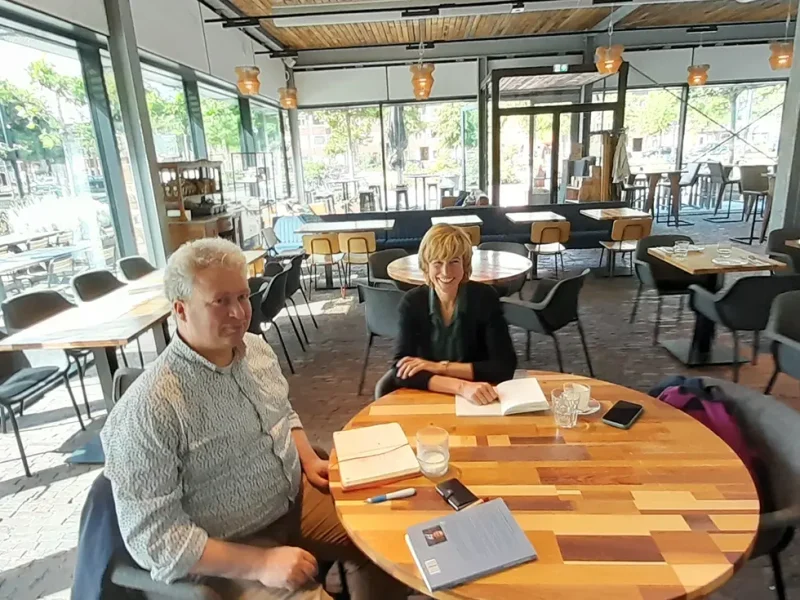
As Brother Tuck, Willem van Spaendonck is committed to creating a more inclusive labour market. Recently, he visited i-did. After a warm welcome and a slightly chaotic start due to staff absences and a few people arriving late, he sat down in one of i did’s felt lined meeting pods to talk with Vlaviana and Michiel about the organisation’s inclusive working environment and the importance of giving everyone the opportunity to participate.
The Story of i did
i did is a social enterprise that gives people who have been out of work for a longer period the opportunity to learn a trade and discover their talents. At the same time, the organisation tackles the growing textile waste problem by transforming discarded corporate clothing into felt and turning it into beautiful products, ranging from bags and accessories to acoustic interior solutions.
The Story of Vlaviana
Vlaviana has only recently joined i did. She explains that she was in the second year of her healthcare studies when she became pregnant.
“My relationship ended, and I became homeless. Because of various circumstances, I also lost contact with my parents,” Vlaviana says.
Fortunately, after a difficult period and several temporary places to stay, she and her daughter were finally given a home of their own.
“At last, I could breathe again. But I still felt isolated.”
Everything changed when someone from the municipality introduced her to i did.
“I decided to pay them a visit, and I’ve never regretted it for a single second,” says Vlaviana.
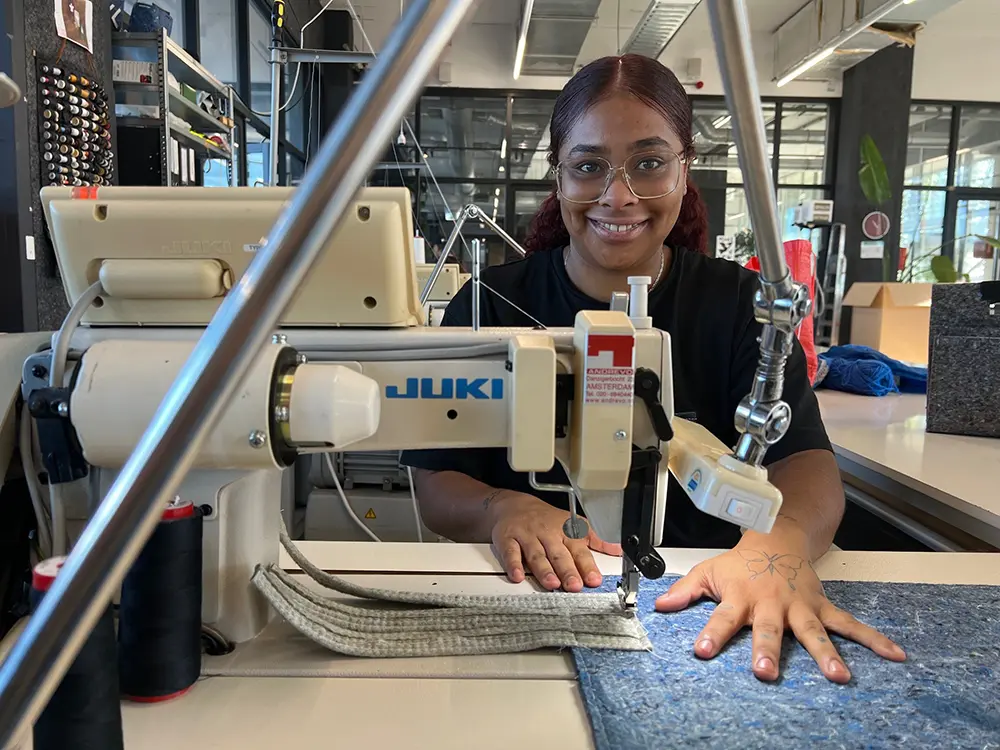
“The municipality helped me find childcare, and they gave me a great deal of support in finding my way back into employment. If everything goes according to plan, I’ll soon be working four days a week. The biggest benefit? That I’m around people again. The funny thing is that I have to learn how to talk to people older than five again,” she says with a smile.
Proudly, Vlaviana shows me her workspace in the i did workshop.
At the end of our conversation, she says with determination, “I’m only 28, and I really want to make something of my life.”
Broeder Tuck’s note: I’m absolutely convinced she will, now that she has taken those first important steps.
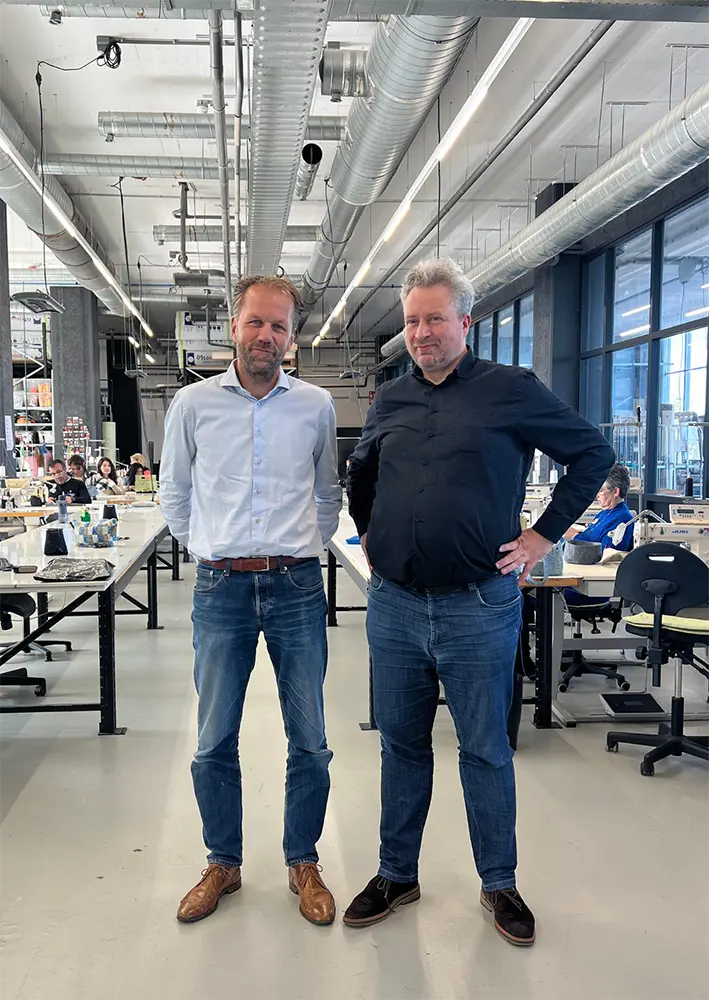
5 Questions for Michiel Dekkers
- What would be the first thing you would do if you were the CEO of the UWV?
My first priority would be to prevent people from becoming inactive after losing their jobs. I would make sure they could get back to work as quickly as possible. At i did, I see every day how difficult it can be for people to rebuild their self confidence once they have been out of work for a long time. - What is the secret behind i did?
We are a very people focused organisation. We provide a safe working environment and make a point of giving plenty of compliments and encouragement. As a result, we see people truly flourish. Around 80% of those who complete our programme quickly find a job outside i did, which creates space for new participants. And if we discover that i did is not the right place for someone, we make sure they are warmly guided towards a more suitable opportunity rather than being left on their own. - What is the biggest mistake you have ever made?
When we started the factory during the COVID pandemic, we faced all kinds of unexpected setbacks. At the same time, I was doing everything I could to keep the operation running. Looking back, I should have asked for help much sooner. - What makes you most proud of i did?
Of course, I’m proud when our machines are perfectly adjusted and we produce beautiful felt products that our customers love. But what makes me happiest is seeing people truly blossom. Not long ago, I was giving a presentation to potential clients when a former participant walked in to tell everyone she had found a job that suited her perfectly. Seeing someone who used to be very shy walk in with that much confidence made me incredibly proud. - Which well known Dutch person would you like to meet, and what would your first question be?
Boyan Slat. I would ask him how he managed to turn an almost impossible idea like The Ocean Cleanup into a successful international organisation. (Now that’s what I call swimming against the tide.)